Do you need an accountant if you earn over £100k?
Overview
In the UK, earning over £100,000 introduces additional tax rules that make becoming more tax-efficient a matter of careful decision-making. For simple situations, such as a PAYE earner with a single income source, these decisions can often be managed independently. However, as your income becomes more complex, the value of professional tax advice becomes clearer.
Learn which tax rules apply, how to reduce their impact as a straightforward earner, when to seek an accountant’s help, and how much an accountant could potentially save you.
What Happens When You Earn Over £100,000?
Most UK taxpayers receive a tax-free Personal Allowance (£12,570). However, once adjusted net income exceeds £100,000, the allowance is reduced by £1 for every £2 earned above this threshold.
Example:
Income: £110,000
Personal Allowance lost: £5,000
Remaining allowance: £7,570
The lost £5,000 of Personal Allowance means an additional £5,000 of income becomes taxable at the 40% higher rate, creating an extra £2,000 tax charge (£5,000 × 40%). Combined with the £4,000 income tax on the additional £10,000 earned, this creates an effective 60% marginal tax rate.
Scenario: One income source
For those earning over £100k from one income source, an accountant can be useful but is not strictly necessary. Let us take the example of someone with a £110k base salary. Contributing £10k into a pension can reduce net income back to £100k, restoring the Personal Allowance and creating around £6,000 in tax savings.
This calculation is relatively straightforward, but the most efficient method of making the contribution depends on the employer’s pension scheme. Using salary sacrifice rather than a personal pension contribution may provide additional savings worth thousands if the employer passes on its National Insurance saving. An accountant can review the available options and give concrete advice on the difference between taking the full income as salary, making a personal pension contribution, or using salary sacrifice.
Scenario: Multiple income sources
For those earning over £100k from multiple income sources, an accountant can provide clear tax-saving benefits.

James
James earns £90,000 salary and receives £25,000 rental income. His accountant identifies £5,000 of missed allowable expenses, reducing his taxable profit and saving around £2,000 in tax
Sarah
Sarah earns £80,000 salary and receives £40,000 dividends from her company. Her accountant reviews how profits are extracted through salary, dividends and pension contributions, saving around £4,000 in tax
David
David earns £100,000 salary and receives £30,000 in employee shares. His accountant advises on when to exercise and sell shares, ensuring he uses available tax advantages and avoids paying unnecessary capital gains tax liability
The compounding benefits of support
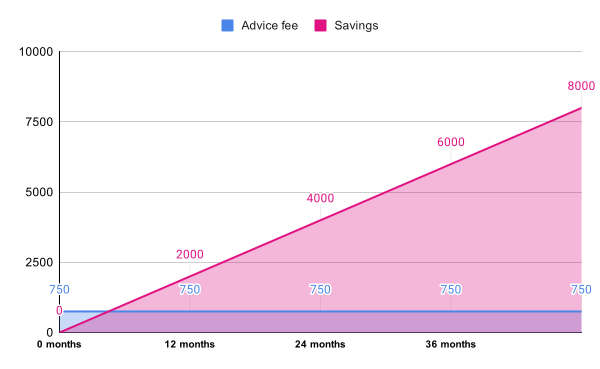
Taking the example of James, who pays an accountant a £750 advice fee for an insight that saves him £2000 in tax per annum.